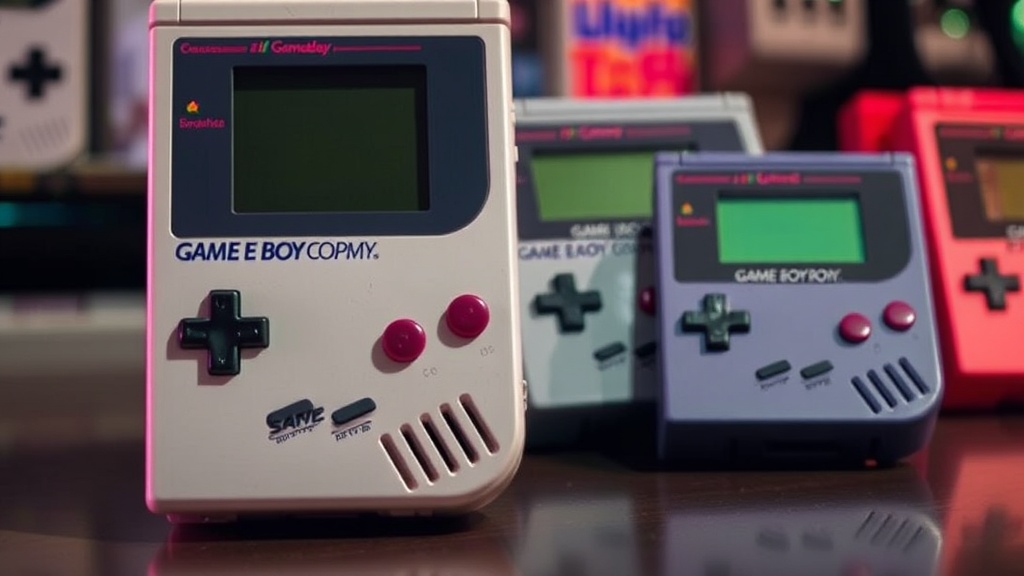
5 Rare Game Boy Collectibles Every Retro Gamer Should Hunt For

Game Boy Light - Japan-Only Backlit Console
Pokemon Center Gold & Silver Limited Edition GBC
Starfire Prototype Cartridge (Unreleased Game)
Game Boy Advance SP Tribal Edition
Nintendo Power Mew Distribution Cartridge
What Makes Game Boy Collectibles So Valuable?
Rarity drives the retro gaming market. The Game Boy line—spanning from 1989's brick to the Micro in 2005—produced thousands of items. Most are common. A select few aren't. This post covers five genuinely rare pieces that command serious money at auction, appear in high-end collections, and represent the pinnacle of portable gaming history. Whether you're hunting for investment-grade hardware or simply want to know what exists beyond the flea-market finds, these items deserve attention.
What Is the Nintendo PowerFest '94 Game Boy Prototype?
The Nintendo PowerFest '94 Game Boy prototype is a competition cartridge created for a promotional tour that never received commercial release. Only a handful exist—and most collectors will never touch one.
In 1994, Nintendo organized the PowerFest tour across North America. The event featured timed competitions using special cartridges loaded with custom challenges. While the SNES version gets most headlines, the Game Boy variant exists in vanishingly small numbers. Most were returned to Nintendo and destroyed. A few escaped.
The cartridge itself contains modified versions of Tetris, Super Mario Land, and Dr. Mario—each tweaked for competitive play with strict time limits. The shell is standard gray Game Boy plastic. The label reads "Nintendo PowerFest '94" in bold lettering. Nothing else distinguishes it from a distance.
Here's the thing: provenance matters enormously with this item. The cartridge commands $5,000–$10,000+ at auction—but only with documentation. Fakes circulate. Heritage Auctions has handled legitimate sales, and their listings provide useful comparison points for authentication markers.
The catch? Even wealthy collectors rarely see these outside museum displays. The PowerFest '94 Game Boy cartridge represents true holy-grail territory.
Which Game Boy Games Are Actually Rare Versus Just Expensive?
Several Game Boy titles combine genuine scarcity with high price tags, though rarity and expense don't always overlap. Understanding the difference saves money and disappointment.
Kid Dracula (1993) tops most want lists. Konami released this charming platformer—a spinoff of the Castlevania series—late in the Game Boy's life cycle. Sales were modest. Copies circulated primarily through rental chains, meaning complete-in-box examples are extraordinarily scarce today.
A loose cartridge runs $150–$200. Complete with manual and inserts? Expect $600–$800. Sealed copies break $1,500 at PriceCharting-tracked auctions. The game never saw a Japanese Game Boy release, eliminating the import option that softens prices for other rare titles.
Worth noting: Spud's Adventure (1991) and Amazing Tater (1991) form a related pair. Atlus published both puzzle-adventure games in limited quantities. Complete copies command $300–$500 each. They're not "fun" investments—gameplay is mediocre—but scarcity drives value regardless.
Rescue of Princess Blobette (1990) completes the expensive-original-GB trinity. The sequel to A Boy and His Blob sold poorly. Factory-sealed copies essentially don't exist in the wild. Even well-worn cartridges fetch $80–$120.
That said, don't confuse aftermarket speculation with true rarity. Some "rare" games saw large print runs but developed collector bubbles. Shantae (2002) is expensive ($400+ complete) but thousands of copies exist. Compare that to legitimate low-print titles—there's a meaningful distinction.
| Title | Release Year | Estimated Print Run | Complete Price Range |
|---|---|---|---|
| Kid Dracula | 1993 | ~25,000 | $600–$800 |
| Spud's Adventure | 1991 | ~15,000 | $300–$500 |
| Amazing Tater | 1991 | ~15,000 | $300–$500 |
| Rescue of Princess Blobette | 1990 | ~20,000 | $200–$300 |
| Shantae | 2002 | ~15,000–20,000 | $400–$600 |
What Are the Rarest Game Boy Color and Advance Limited Editions?
Japan received numerous limited-edition Game Boy hardware variants that never left the archipelago. Some are genuinely scarce; others are merely import-uncommon.
The Pokémon Center New York Game Boy Color (2001) deserves special mention. Nintendo created this translucent orange/red unit for the opening of the Pokémon Center in Rockefeller Center. Only 1,000 units were produced—and distribution was limited to event attendees and lottery winners.
Original boxes command $2,000+. Loose hardware runs $800–$1,200 depending on condition. The Pikachu silhouette on the battery cover distinguishes it from the similar—but far more common—Japanese Pokémon Orange variant.
Here's the thing about the Game Boy Advance "Triforce" kiosk demo unit: it wasn't supposed to leave stores. These units—featuring gold shells with the three-triangle legend—were display pieces for The Legend of Zelda: A Link to the Past & Four Swords. A few escaped retail destruction. Authentic units sell for $3,000–$5,000 when documented.
The Hello Kitty Game Boy Pocket (1997) presents an interesting case. It isn't rare in Japan—thousands exist. But North American collectors pay premiums ($150–$300) for complete examples because official distribution never occurred outside Asia. The pink shell and embossed Sanrio character make it instantly recognizable.
Worth noting: condition sensitivity varies dramatically. Limited editions with painted artwork (like the Pokémon Gold/Silver GBC) chip easily. Mint examples carry 300%+ premiums over "good" condition. Transparent shells hide wear better—collectors know this, and pricing reflects it.
Where Can Collectors Find Game Boy Development Hardware?
Game Boy development hardware surfaces occasionally through estate sales, defunct studio liquidations, and specialist auction houses. These pieces represent the tools that built the library—and they're disappearing into private collections.
The Wide Boy64 (and its predecessor, the Wide Boy) allowed developers to test Game Boy and Game Boy Color software on Nintendo 64 hardware. The device inserted into the N64 cartridge slot and accepted Game Boy carts. Output displayed on television—essential for team debugging and screenshot capture.
Nintendo never sold these units commercially. They were loaned to licensed developers and returned upon project completion. Surviving examples are extraordinarily rare. The Wide Boy64 CGB (Color compatible) variant appears at auction perhaps once every two years. Prices start at $4,000 and climb rapidly.
The Intelligent Systems Game Boy Flash Cartridge represents another development artifact. IS—responsible for Fire Emblem, Paper Mario, and Advance Wars—used proprietary flash carts for rapid testing. These purple-labeled cartridges surface occasionally from ex-employee sales. Authentication is challenging, and prices vary wildly ($500–$2,000).
The catch? Documentation rarely accompanies these items. Without provenance linking hardware to specific studios or projects, value drops significantly. Serious collectors maintain relationships with former developers—a network built over years that newcomers can't easily replicate.
What Game Boy Promotional Items Are Worth Collecting?
Beyond games and hardware, Nintendo produced promotional materials that have become collectibles in their own right. The best pieces combine scarcity with display appeal.
The Game Boy Camera Gold "Mario" Edition (1998) was a Japanese contest prize—not a retail product. Only 100 units were produced, each serial-numbered. The camera cartridge came in special gold packaging with Mario emblazoned across the front. Complete examples have sold for $3,000+ through Japanese auction sites.
Retail kiosks—those bulky plastic displays from Electronics Boutique and Babbage's—have developed a following. The Game Boy Color retail demo station (1998–2000) allowed customers to sample games via timed sessions. Surviving units with original CRT screens and working mechanisms fetch $500–$1,200 depending on condition and included software.
That said, storage is a genuine consideration. A retail kiosk consumes serious space. Most collectors pass—keeping prices relatively accessible compared to handheld hardware.
Promotional clothing offers an alternative. The Nintendo Power "Game Boy" subscriber jacket (1992)—a nylon windbreaker with original GB artwork—surfaces occasionally. Sizes are typically XL (period-appropriate sizing). Condition varies wildly; most were worn. Mint examples with tags approach $400.
"Collecting isn't about owning everything—it's about owning the right things that tell a story about the medium's history."
Display materials complete the promotional picture. Original Game Boy launch posters (1989) featuring the "dot matrix with stereo sound" tagline command $100–$300 depending on condition. Store window vinyl decals from the Game Boy Advance launch (2001) are cheaper ($50–$100) but harder to authenticate.
The reality? Most promotional items were designed to be disposable. Survival represents luck as much as intent. When pieces surface with documented provenance—sales receipts, employee identification, corporate correspondence—the premium is justified.
Start with what interests you. Build knowledge before building inventory. The rarest Game Boy collectibles reward patience, research, and relationships—not just bank accounts.