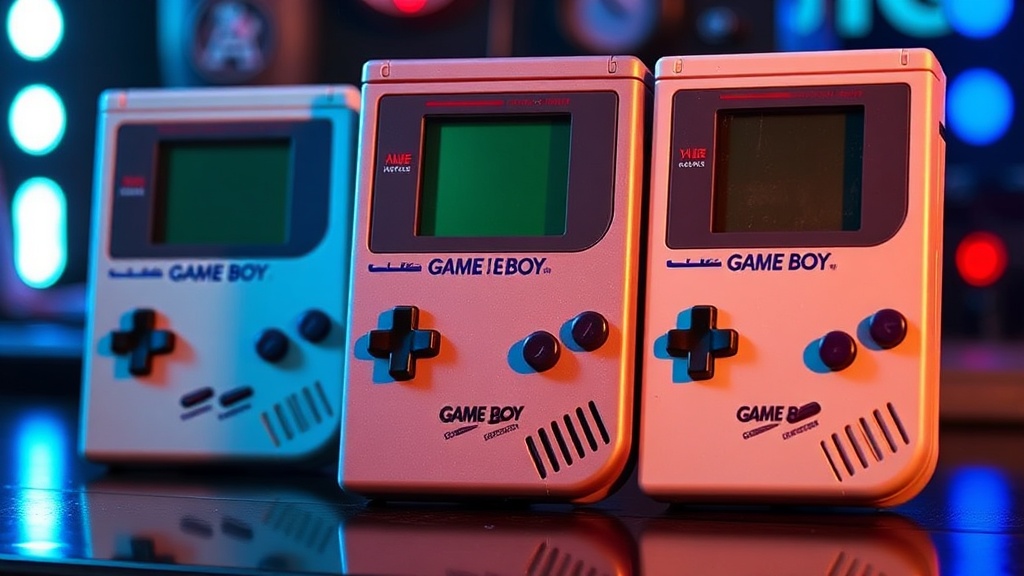
7 Rare Variants of the Original Game Boy to Hunt For

The Atomic Purple Classic
The Limited Edition Pokémon Yellow
The Transparent Teal Variation
The Gold Edition Special Release
The Silver Edition Collector Item
The Limited Edition Dragon Quest Version
The Rare Pink Handheld Variant
This guide identifies seven specific rare variants of the original Nintendo Game Boy that collectors actively hunt for today. You'll learn the specific colorways, limited editions, and production nuances that separate a common gray unit from a high-value centerpiece for your collection. Whether you're looking for aesthetic consistency or high-end investment pieces, these are the models worth tracking down.
What are the rarest Game Boy variants?
The rarest Game Boy variants are typically limited production runs, promotional colorways, or regional exclusives that were never released in mass quantities in North America. While the standard DMG-01 gray unit is everywhere, certain special editions—like the Pokémon Yellow versions or certain Japanese-exclusive colors—command much higher prices on the secondary market. Finding these requires more than just a casual stroll through a local thrift store; you often have to hunt through specialized auction sites or collector-driven forums.
One of the most sought-after pieces is the Pokémon Special Edition. These weren't just any color swaps. They were often part of specific promotional tie-ins and feature unique aesthetics that deviate from the standard Nintendo aesthetic. If you're looking to build a serious collection, these are your primary targets.
Another high-tier target is the Nintendo Game Boy Light. While it technically falls under the "Game Boy Color" era of hardware evolution, it is a distinct, much rarer relative of the original DMG. It's a translucent, high-end piece of hardware that collectors prize for its unique build quality and rarity. It's a bit of a different beast than the standard DMG, but it sits in that same legendary tier of handheld history.
1. The Pokémon Yellow Edition
This is the holy grail for many handheld enthusiasts. It's a bright, vibrant yellow that matches the aesthetic of the Pokémon Yellow version of the game. It’s not just a color swap; it’s a piece of history. Many of these were produced to celebrate the massive cultural phenomenon of the Pokémon franchise during the late 90s. It's a striking piece of hardware that looks much better on a shelf than the original gray.
2. The Nintendo Game Boy Light
As mentioned, this is a bit of a specialized piece. It's much harder to find than a standard DMG because it was primarily a Japanese release. The build is incredibly sleek, and the backlight is a massive upgrade over the original non-backlit screens. If you can find one in mint condition, you've hit the jackpot. It's a piece of engineering that shows how much Nintendo was pushing the boundaries of mobile gaming at the time.
3. The Aurora Blue Variant
The Aurora Blue is a fan favorite for its deep, rich color. It isn't as common as the standard colors, and it has a certain "cool factor" that makes it stand out in a lineup of gray consoles. It’s a subtle change, but to a trained eye, it’s immediately recognizable. It’s the kind of piece that makes a collection feel curated rather than just a pile of old tech.
4. The Clear/Translucent Series
The translucent era was a huge deal in the 90s. Collectors often look for the "Atomic Purple" or "Clear Blue" shells. While some of these are more common in the Game Boy Color line, finding a clear-shell original DMG is a different story entirely. These pieces show off the internal circuitry—a look that was incredibly popular during the hardware design trends of the era. It's a nostalgic aesthetic that never truly goes out of style.
5. The Japanese "Nintendo Color" Editions
Japan often received hardware with slightly different color palettes and finishes. These Japanese-exclusive versions are often more refined and can be significantly more expensive due to their scarcity in Western markets. If you're looking to expand your horizons, looking toward the official history of the Game Boy on Wikipedia can help you understand the regional differences in hardware releases. These Japanese variants often feature much cleaner branding and more distinct colorways.
6. The Promotional "Gold" Editions
These are the "unicorn" items. These were often given to winners of contests or used in retail displays. They aren't meant for the general public, which is why they are so hard to find. A genuine Gold Game Boy is a massive flex in the collecting community. Just be careful—there are many "gold-painted" standard units floating around. A real one is a masterpiece of branding.
7. The Limited Edition "Silver" DMG
The Silver variant is a sleek, sophisticated version of the classic handheld. It lacks the ruggedness of the gray model and feels much more like a premium piece of electronics. It’s a subtle distinction, but it makes a huge difference in how the device feels in your hands. It's a perfect example of how minor changes in color can completely change the perception of a classic piece of hardware.
To help you visualize the rarity and value, I've put together a quick breakdown of how these compare in terms of typical collector interest.
| Variant Name | Rarity Level | Primary Appeal |
|---|---|---|
| Pokémon Yellow | High | Nostalgia & Branding |
| Game Boy Light | Very High | Hardware Innovation |
| Aurora Blue | Medium | Aesthetic/Colorway |
| Translucent/Clear | Medium | Internal Visibility |
| Japanese Exclusives | High | Regional Scarcity |
| Gold Edition | Extreme | Prestige/Rarity |
| Silver DMG | Medium | Premium Feel |
How much does a rare Game Boy cost?
The price of a rare Game Boy variant depends entirely on its condition, whether it includes the original box, and how much "hype" is currently surrounding that specific model. A standard, used gray Game Boy might only set you back $30 or $40, but a Pokémon Yellow edition in a complete box can easily climb into the hundreds. If you're looking at a Gold Edition or a pristine Game Boy Light, you're looking at a significantly higher investment. Always check recent sales on sites like eBay to see what people are actually paying, rather than just looking at the "asking" prices. The market is volatile, and prices can shift based on the current state of the retro gaming market.
One thing to keep in mind: condition is everything. A cracked shell or a screen with dead pixels will drastically tank the value of even the rarest colorway. I've spent way too much time trying to clean up old, yellowed plastic—it's a headache. If you want to keep your hardware looking its best, you should look into keeping your handheld screens clear of smudges to maintain that pristine look. A clean device is a valuable device.
The cost of maintenance is also a factor. If you're buying these for play, you'll likely need to replace the batteries or even the screen contrast. If you're buying for display, you'll want to ensure the battery terminals aren't corroded. It's a fine line between a treasure and a piece of junk. Always check the battery compartment before you hand over any money.
It's worth noting that the "collector's premium" is real. You aren't just paying for the plastic and the silicon; you're paying for the history and the rarity. That's the reality of the hobby. Some people might think it's overkill to pay $200 for a yellow handheld, but for those of us who live for the hunt, it's part of the fun. It's about the pursuit of the perfect piece.
As you continue your search, remember that the most important thing is to do your research. Don't just buy the first thing you see on an auction site. Verify the authenticity of the colorway. Check the serial numbers. Look at the high-resolution photos. The more you know, the better your chances of landing a true rarity instead of a common unit with a custom paint job. Happy hunting.