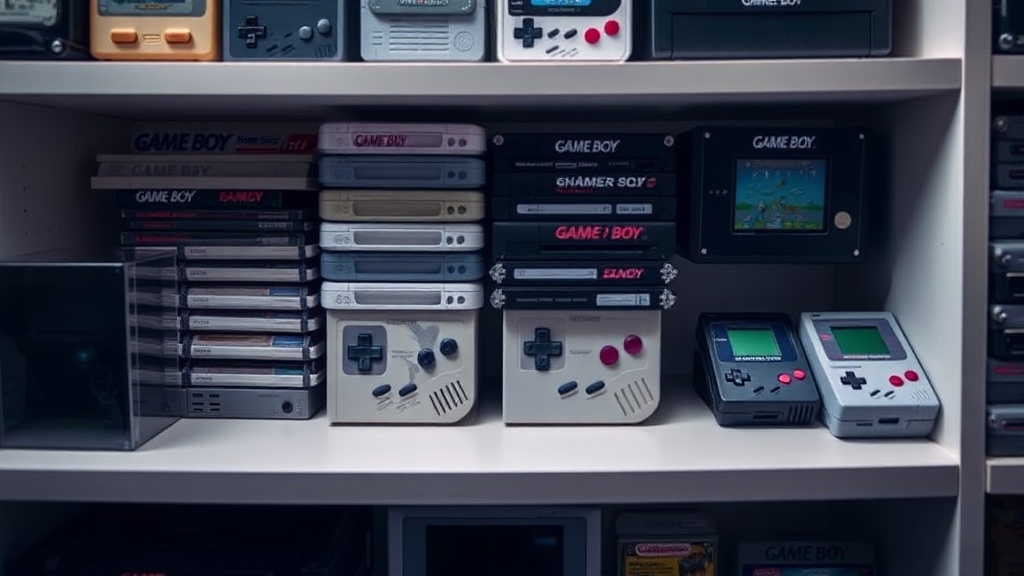
Setting Up Your Game Boy Collection Storage System

You just finished a massive haul from a local estate sale. You've got a dozen pristine Game Boy Color cartridges, a handful of original DMG-01 units, and several boxed accessories sitting in a cardboard box on your desk. If you leave them there, moisture, dust, and gravity will start their slow work on your investment. Setting up a dedicated storage system isn't just about tidiness; it's about creating a controlled environment that keeps your hardware in the same condition it was in when you first unboxed it.
This guide covers the practicalities of organizing and storing handheld hardware and software. We'll look at the differences between ambient storage and controlled environments, the tools you'll need to keep things organized, and how to avoid the common mistakes that lead to shelf-wear or hardware failure.
Where is the best place to store handheld consoles?
The biggest mistake collectors make is treating their hardware like standard household items. You shouldn't store your collection in a damp basement or a hot attic. Temperature and humidity are the two biggest enemies of vintage electronics. If you're storing a collection of Game Boy Advance SPs or original Game Boys, you want a stable, climate-controlled room—ideally a living area or a dedicated office. Extreme heat can soften the plastics and cause the internal batteries to leak, while high humidity invites oxidation on the metal pins inside the cartridge slots.
When picking a spot, avoid placing your display shelves near air vents or windows. Direct sunlight—even through a window—can cause yellowing (that dreaded phenomenon known as retrobrighting in reverse) and can actually melt certain types of internal components over time. If you want to be certain about your storage environment, I recommend keeping a digital hygrometer nearby. It's a cheap little device that tells you exactly what the humidity level is. Aim for a steady 40-50% humidity range to keep those circuit boards happy.
What are the best ways to organize cartridges?
Once you have a stable environment, you need a way to categorize your software. You could just pile them in a box, but that's a recipe for scratched labels and broken cartridge shells. For a growing collection, I suggest looking into specialized media storage. There are several ways to approach this depending on your budget and how much space you have.
- Acrylic Display Stands: These are great for a small, high-end collection. They look professional and allow you to see the art clearly, but they offer minimal protection against dust.
- Plastic Magazine Holders: These are a classic choice for collectors. They provide a sturdy, upright structure that prevents the weight of the cartridges from crushing the ones at the bottom.
- Customized Binder Sleeves: If you have a lot of loose cartridges, using specialized sleeves can keep the labels protected from oils on your skin.
If you're looking for professional-grade organization, check out the standards used by many museum-grade archivists. While they might be overkill for a home collection, the principles of physical-separation and labeling remain the same. You can find more about archival-grade storage standards through the Library of Congress resources on preserving physical media, which helps explain why even a little bit of environmental control matters so much.
How can I protect my handheld consoles from dust and scratches?
Dust is more than just a nuisance; it's an abrasive. If fine particles get into the buttons or the cartridge slot, they can cause mechanical failure. One of the best ways to protect your handhelds is by using individual protective cases. For the Game Boy Advance or the original Game Boy, a hard-shell carrying case is a great way to keep the unit safe when it's not being played. When you aren't actively using a device, a simple silicone skin or a clear protective shell can prevent surface scratches from everyday wear and tear.
For the cartridges themselves, consider using protective plastic cases. Many collectors use the original cardboard boxes, but if you're storing a large volume, you might want to look into high-quality plastic replacement cases. These provide a much better barrier against the elements. If you are ever unsure about the condition of a cartridge, you can consult the documentation at IGN or other gaming archives to see historical specs and original packaging details, which can help you determine if a modern replacement is appropriate for your collection.
Remember, the goal isn't to just buy things, but to maintain them. A well-organized system should be easy to navigate. If you have to dig through a bin to find one specific game, your system has failed. Label everything. Use a label maker or even just a simple index card system to track what you have, where it is, and its current condition. This makes expanding your collection much more manageable and prevents you from accidentally buying duplicates.
Don't forget about the power sources. If you have handhelds with internal batteries, or if you use AA batteries in your original Game Boy, don't leave them inside the device for long periods of time. A leaking battery is a one-way ticket to a dead console. If you're storing a device for a long period, remove the batteries entirely. This is a simple step that saves a lot of heartache down the road.