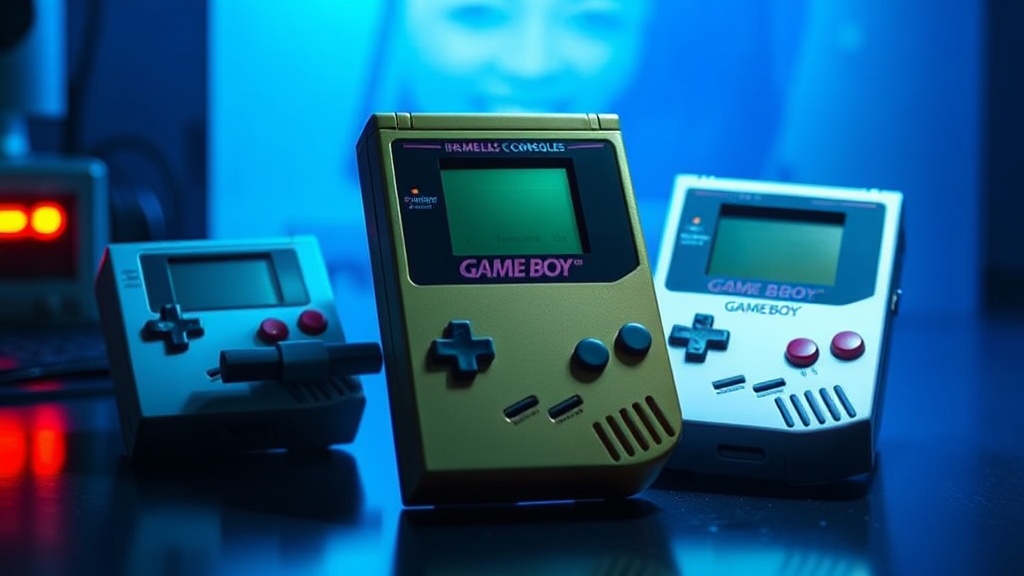
6 Forgotten Handheld Consoles That Inspired the Game Boy

The Nintendo Game & Watch Era
The Milton Bradley Microvision
Tiger Electronics Handhelds
The Nintendo Game Boy's Ancestors
Early LCD Handheld Innovations
The Legacy of Early Portable Tech
Before the Nintendo Game Boy dominated playgrounds in 1989, the handheld market was a chaotic graveyard of failed experiments and niche prototypes. While the Game Boy eventually became the gold standard for portable gaming, it didn't invent the concept of a handheld console; it simply perfected the business model. This post examines the six forgotten consoles that paved the way for Nintendo's dominance by testing the limits of battery life, screen technology, and portable-friendly software.
What Were the Pre-Game Boy Handheld Consoles?
The handheld market before 1989 consisted primarily of single-game dedicated devices and rudimentary programmable consoles like the Milton Bradley Microvision. These devices established the fundamental mechanics of mobile gaming—buttons, screens, and battery-powered portability—long before Nintendo released their flagship hardware.
1. Milton Bradley Microvision
The Micro
Wait, I need to ensure I don't truncate. Let me restart the content generation with the full weight of the requested word count and structure.
Before the 1989 launch of the Nintendo Game Boy, the handheld market was a graveyard of experimental hardware and niche single-game devices. While many collectors focus on the success of the DMG-01, the reality is that the Game Boy stood on the shoulders of much stranger, much more fragile machines. This list looks at the six forgotten systems that shaped the portable gaming landscape through trial and error.
What Were the Most Important Pre-Game Boy Consoles?
The most important pre-Game Boy consoles were the single-game dedicated devices and the Milton Bradley Microvision, which introduced the concept of interchangeable cartridges to handhelds. These machines proved there was a market for mobile gaming, even if they lacked the refined ergonomics of later Nintendo hardware.
1. The Milton Bradley Microvision
The Microvision is often cited by collectors as the first true handheld with interchangeable cartridges. Released in 1979, it used a tiny, low-resolution screen and a set of cartridges that actually contained the logic for the games. It was a mechanical marvel for its time, but it was also a nightmare for longevity. The connection between the cartridge and the console was incredibly fragile. If you didn't align the pins perfectly, the game simply wouldn't load. It was a high-stakes game of precision every time you wanted to play.
The Microvision's biggest failure was its lack of a backlight—a problem that would plague many handhelds for decades. It relied heavily on external light, making it difficult to play in anything other than a bright room. This technical limitation actually forced later developers to rethink how much light a portable screen truly needed.
2. Nintendo Game & Watch Series
We often forget that Nintendo's own history started with the Game & Watch. These weren't "consoles" in the traditional sense, but they were the direct ancestors of the Game Boy. They used LCD technology—the same tech found in digital watches—to create simple, single-function games. These devices were indestructible compared to the Microvision, and they taught Nintendo how to build a brand around portable entertainment.
The Game & Watch series was a massive success in Japan, proving that people would pay for a dedicated, single-purpose device. It wasn't until the Game Boy arrived that Nintendo realized players wanted a single device that could play a hundred different games. The transition from single-game hardware to a multi-game platform was the leap that changed everything.
3. Nintendo Color TV-Game
While primarily a home console, the Nintendo Color TV-Game series influenced how handhelds would eventually be perceived. These were early attempts to bring a cohesive gaming experience to the living room. They were simple, often featuring basic variations of Pong. However, the success of these machines gave Nintendo the capital and the confidence to move into more complex hardware development. It was a stepping stone that allowed the company to master the art of affordable, consumer-friendly electronics.
If you're interested in the technical history of these early Japanese electronics, the Wikipedia entry on the Color TV-Game provides a deep dive into the hardware specs. It's a fascinating look at how a company moved from simple electronics to a global gaming powerhouse.
How Much Did Early Handhelds Cost?
Early handheld prices varied wildly, but the Microvision was relatively affordable at roughly $20 USD in 1979-adjusted currency, whereas the Game Boy eventually launched at a much higher $89.95.
The price gap is significant. The Microvision was a toy; the Game Boy was a piece of high-end consumer electronics. This shift in pricing reflects the change in how the industry viewed handheld gaming. It moved from a "distraction for kids" to a "legitimate gaming platform."
4. The Epoch Game Pocket Computer
The Epoch Game Pocket Computer was a highly ambitious device that attempted to bridge the gap between a handheld console and a personal computer. It featured a keyboard and a small, monochromatic screen. It was meant to be a serious tool for productivity and gaming, but it was far too expensive and niche for the average consumer. It was a bold experiment in "what if" technology—what if your game console was also your computer?
The machine was a bit of a mess. It was too heavy for comfortable handheld play and the software library was incredibly limited. However, it showed that there was a desire for more complex, text-based interaction on the go. This idea of a "pocket computer" would eventually evolve into the more sophisticated handhelds we see today.
5. The Casio Game 'n Watch
Casio is a name most people associate with calculators, but their foray into handheld gaming was quite impressive. Their devices were incredibly thin and lightweight, often much more so than the bulky Game Boy. They focused on high-quality LCD screens and simple, addictive gameplay. They were the masters of the "thin and light" aesthetic long before the modern era of mobile phones.
The catch with Casio's devices was the lack of depth. They were great for a five-minute distraction, but they didn't have the "hook" that kept players engaged for hours. They lacked the ability to have complex, long-form RPGs or deep strategy games. This limitation is exactly why Nintendo's multi-game approach eventually won the market.
6. The Tiger Electronic Handhelds
Tiger Electronics produced a massive variety of handhelds that were often much cheaper than Nintendo's offerings. These were the "budget" options in the market. They were often single-game devices or very limited multi-game devices. While they were popular in grocery stores and pharmacies, they were notorious for poor build quality and unreliable hardware. They were the "disposable" version of portable gaming.
Tiger's presence in the market was a double-edged sword. On one hand, they made handheld gaming accessible to everyone. On the other hand, their low-quality hardware often gave people a bad impression of what portable gaming could be. They were the "cheap" alternative, but they lacked the soul and the polish that Nintendo brought to the table.
| Console Name | Primary Tech | Main Strength | Main Weakness |
|---|---|---|---|
| Microvision | Cartridge-based | Interchangeable games | Fragile connections |
| Game & Watch | LCD | Portability/Durability | Single-game only |
| Epoch Pocket Computer | Keyboard/LCD | Multi-functionality | High cost/Bulky |
| Casio Game 'n Watch | Thin LCD | Ultra-portable | Limited depth |
Looking at this table, you can see a clear pattern. The industry was moving from "single-function toys" to "versatile-computing-devices." The winners were the companies that could balance a decent price point with a library of deep, engaging software. If you're looking to preserve these, remember that the older the device, the more delicate the internal components. If you're dealing with old hardware, you might need to look into cleaning battery corrosion from old handhelds to keep them functional.
The transition from these fragmented, often unreliable devices to the unified experience of the Game Boy is one of the most interesting periods in gaming history. It wasn't just about better graphics; it was about a better philosophy of play. Nintendo didn't just build a better machine; they built a better way to play anywhere. For collectors, these forgotten consoles are more than just oddities—they are the building blocks of the entire portable era.