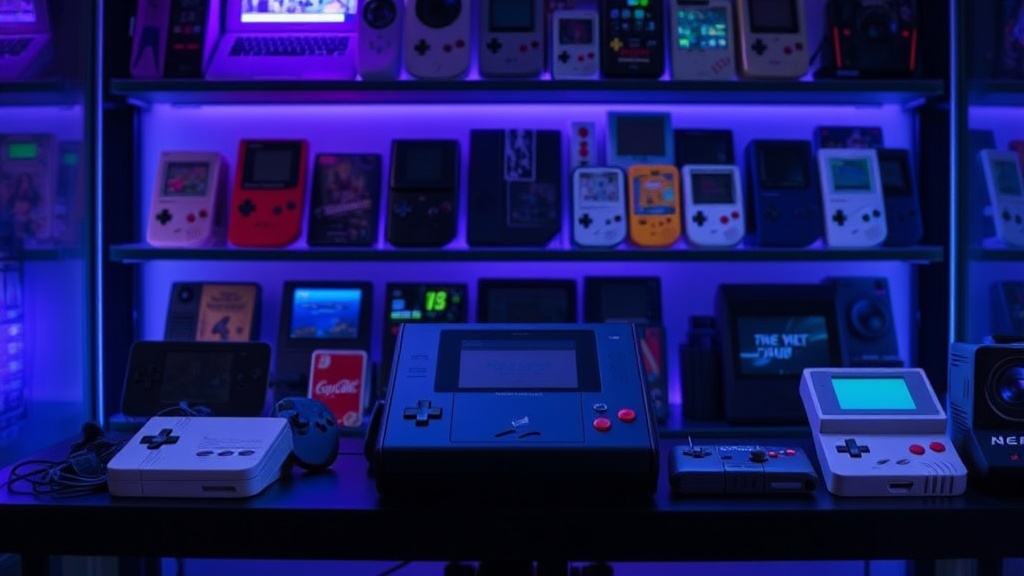
4 Best Ways to Showcase Your Handheld Collection

Custom Acrylic Display Cases
Floating Wall Shelves
LED Lighted Showcase Cabinets
Themed Desktop Stands
You'll learn the best methods for displaying handheld consoles to prevent damage while maximizing visual impact. This guide covers everything from acrylic cases to custom shelving, focusing on protecting your hardware from dust, sunlight, and humidity.
How to Display Handheld Consoles Safely?
The safest way to display handheld consoles is by using airtight acrylic cases or specialized display cabinets that prevent dust accumulation and UV exposure. Dust is the silent killer of vintage electronics. It settles into buttons, D-pads, and even inside the cartridge slots if you aren't careful. If you leave a Game Boy Color sitting out on a bare shelf, you're asking for grime to build up in the seams.
Acrylic cases—the kind you see for high-end collectibles—are the gold standard. They provide a clear view of your hardware while acting as a barrier against the environment. If you're displaying a device with an original battery inside, you need to be even more careful about the surroundings.
A quick tip: always ensure your display area isn't near a direct heat source or a window. Heat can cause battery swelling or even leakage, which is a nightmare to clean up. If you've already dealt with a messy situation, you might want to check out my guide on cleaning battery corrosion from old handhelds to ensure your display pieces stay pristine.
Using a display case also helps with the "visual weight" of your collection. A single Game Boy looks fine on a desk, but a dozen consoles scattered around can look like clutter. Grouping them in uniform acrylic boxes creates a sense of intentionality. It turns a pile of old tech into a curated exhibition.
What Are the Best Ways to Show Off a Handheld Collection?
The best ways to showcase a collection include using tiered acrylic risers, wall-mounted shadow boxes, and custom-lit shelving units. Each method serves a different aesthetic goal and requires a different amount of space.
Let's look at the four most effective methods for different types of collectors:
- Tiered Acrylic Risers: These are perfect for deep bookshelves. By using "steps," you ensure the consoles in the back aren't hidden by the ones in the front. It's a classic museum-style approach.
- Shadow Boxes: If you have a smaller, more precious collection (like a handful of high-end Game Boy Advance SPs or a limited edition Nintendo DS), a shadow box is ideal. It keeps everything behind a single pane of glass.
- Floating Shelves: This is the "modern" look. It works well if you have a dedicated gaming room. It looks great, but it offers the least protection from dust.
- Custom LED Lit Shelving: For the serious collector, lighting is everything. Using LED strips (specifically those with low heat output) can make the colors of your handhelds pop.
I've found that tiered risers are the most versatile. You can move them around easily, and they don't require any drilling or permanent-looking installations. (Plus, they're relatively cheap if you buy them in bulk on sites like Amazon or eBay).
If you're looking for inspiration on the history of these devices, the Wikipedia page for handheld game consoles provides a great overview of how the form factors have changed over the decades. Seeing how much the design has evolved helps you appreciate why a modern display looks so different from a vintage one.
Comparison of Display Methods
| Method | Dust Protection | Visual Impact | Cost |
|---|---|---|---|
| Acrylic Risers | Moderate | High | Low |
| Shadow Boxes | Very High | High | Medium |
| Floating Shelves | Low | Very High | Low/Medium |
| Custom LED Shelving | Moderate | Extreme | High |
How Much Does a Professional Display Setup Cost?
A professional-looking display can cost anywhere from $30 for basic acrylic stands to several hundred dollars for custom-built, lit cabinetry. Most collectors start small and build up as their collection grows. It's rarely a one-time expense; it's more of an evolving project.
If you want a high-end look without the custom-built price tag, buy individual components. Instead of one giant cabinet, buy several high-quality acrylic cases and place them on a standard IKEA Kallax unit. This gives you a modular system that can grow with you. If you find a new console, you just buy another case and add it to the shelf.
One thing to watch out for is the quality of the plastic. Some cheaper "acrylic" stands are actually made of polystyrene, which can yellow or become brittle over time when exposed to light. Always check the material specs before you buy. You want something that stays clear and doesn't degrade.
When you're setting up your display, remember that the goal is to protect the hardware. A beautiful shelf is useless if the consoles on it are dying due to poor environmental control. If you're displaying consoles that have had their batteries removed, you're already ahead of the curve. If you're still using original batteries, you're taking a risk. I've written about how to save cartridge saves, and the same logic applies to the physical health of the device in a display.
How Do I Prevent Damage to My Consoles While Displaying Them?
To prevent damage, you must control three main factors: light, dust, and humidity. Sunlight is the biggest enemy of the handheld collector. UV rays will fade the plastics—especially the vibrant colors of the Game Boy Color or the translucent shells of the Game Boy Advance. If your display is in a living room, make sure it's not directly across from a window.
Humidity is another massive factor. If you live in a humid climate, moisture can settle inside the device, leading to corrosion on the internal components or the battery contacts. This is why I always recommend a closed display case over an open shelf. A closed case provides a micro-environment that is much more stable than the rest of the room.
If you've ever noticed a screen looking a bit dim or a button feeling "mushy," it might be due to environmental wear. Before you put a device in a display, make sure it's clean. A dirty console in a display case just looks like a dirty console. It's worth the time to do a deep clean first. You can find my process for cleaning and restoring an original Game Boy if you want to get your hardware looking showroom-ready.
Also, consider the weight. If you're using tiered risers, don't overload them. Some of the older, heavier handhelds (like the Sega Game Gear) can be surprisingly heavy. If the stand isn't sturdy, you'll end up with a pile of broken plastic on your floor. It's a small detail, but it's one that people often overlook when they're excited about a new setup.
The goal isn't just to show off your stuff—it's to preserve it. A collection is an investment of time and money. Treat your display as a museum, not just a shelf. When you treat the hardware with that level of respect, the longevity of your collection increases significantly.